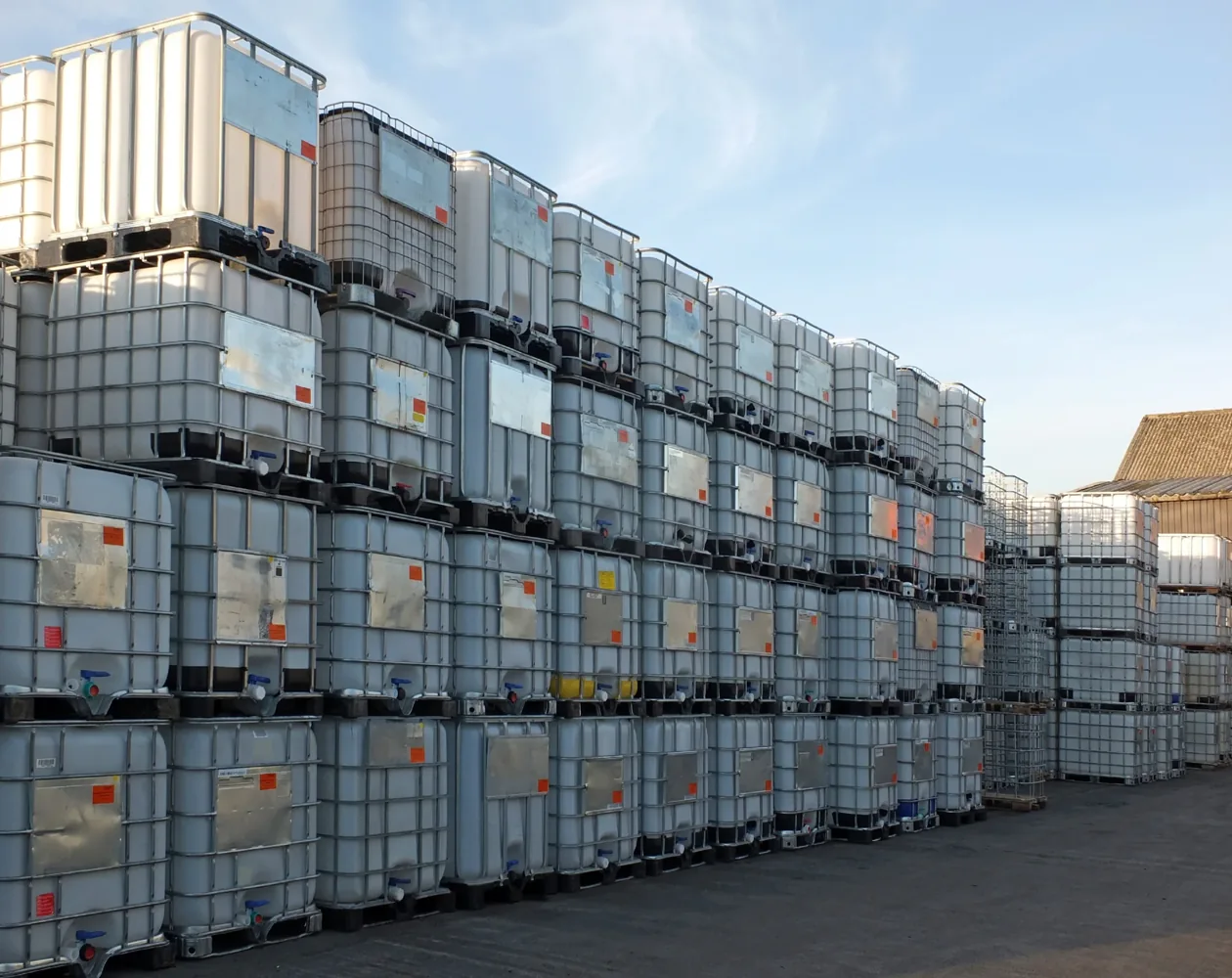
When an intermediate bulk container (IBC) is emptied and prepared for a different product, residues from its previous contents can remain inside. These residues may contaminate the next product, react with it or make the container unsuitable for reuse. Whether cleaning is sufficient depends on what was stored previously, what will be stored next and the condition of the container.
Why apparently empty IBCs retain residue
Emptying an IBC removes most of its contents, but it does not necessarily remove everything in contact with the container. Small quantities can remain around the outlet valve, beneath fittings, along internal surfaces or in areas that do not drain completely.
Different products leave different deposits. Oils can produce persistent films, viscous liquids may collect around the discharge point, and some chemicals can leave crystalline or dried residues. A product that appears to drain cleanly may still leave material that is difficult to see.
The original product’s properties also matter. A deposit may become harder to remove after drying, cooling or prolonged storage. A container that has stood empty for several weeks can therefore present different cleaning requirements from one that has only recently been discharged.
Assessing previous contents before reuse
The starting point is identifying the previous contents accurately. Product labels, delivery records and relevant safety information can help establish what the IBC contained. Where that history is uncertain, treating the container as suitable for a new product simply because it looks empty is unreliable.
The intended next contents are equally important. A small amount of residue acceptable in one application could cause unacceptable cross-contamination in another. For example, a container previously holding a strongly coloured liquid may be unsuitable for a product where even slight discolouration matters.
Compatibility is not limited to chemical reactions. Product quality, odour, cleanliness requirements and the container material all influence the decision. The inner bottle, outlet assembly, seals and other product-contact components need consideration rather than just the visible walls.
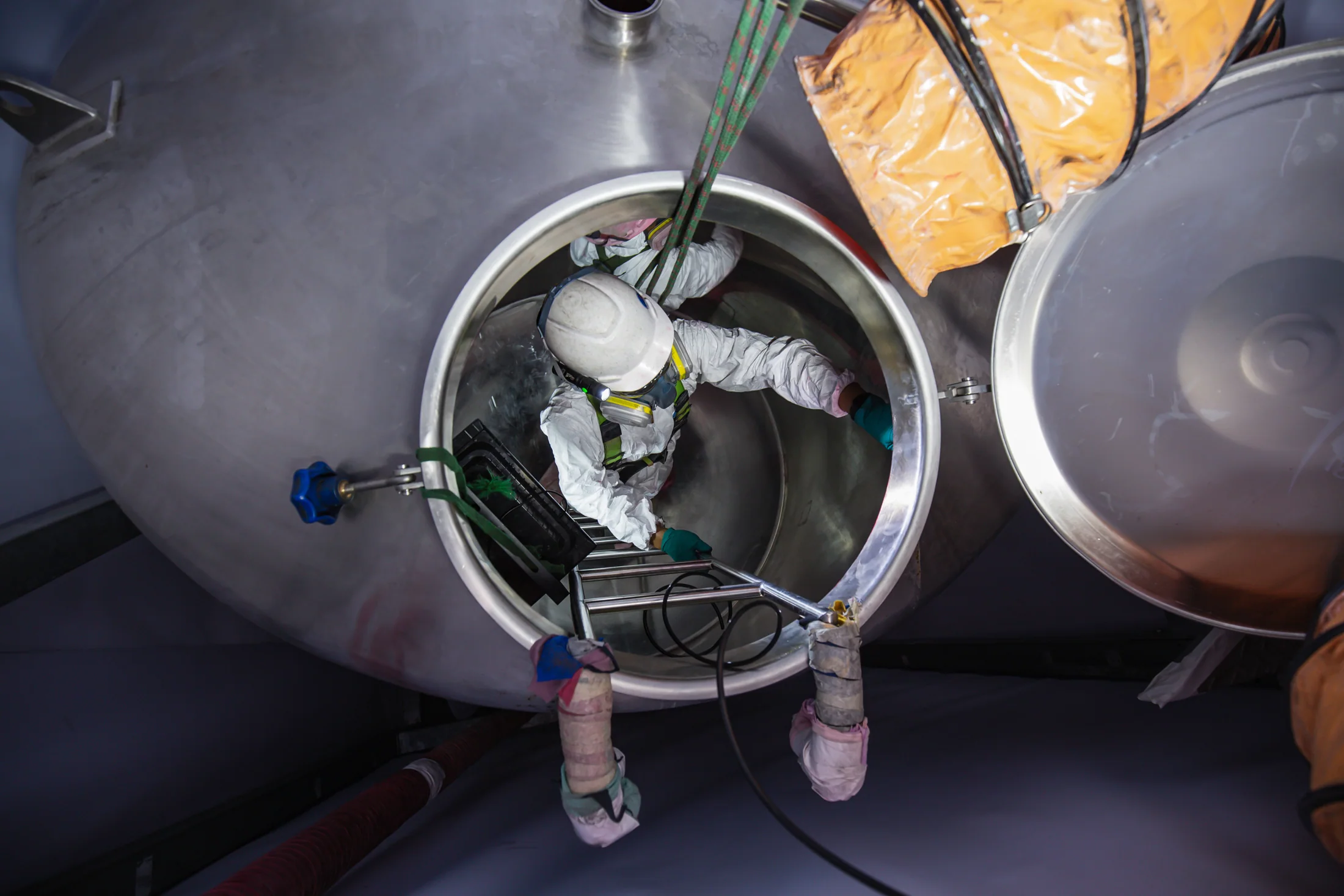
Where reuse is appropriate, IBC cleaning services can address the identified residues. The required result should be agreed against the intended use, rather than assuming that one cleaning standard is suitable for every change of contents.
Reuse and waste classification are different decisions
An IBC being assessed for further use is not automatically waste. However, once a container or its contents are discarded, the nature of the remaining material becomes relevant to waste classification.
For England, the Environment Agency’s packaging waste classification guidance distinguishes clean packaging, packaging contaminated by non-hazardous substances and empty packaging contaminated by hazardous substances. Hazardous residue-contaminated packaging can fall under waste code 15 01 10*.
Importantly, packaging must be empty before the packaging waste classifications can apply. An IBC that still contains unwanted product must not automatically be assigned an empty-packaging waste code. The remaining contents need assessment, and the container must meet the applicable empty-packaging criteria before those codes are used.
The contents removed during cleaning also require consideration. Liquid residues, sludge and cleaning waste are not automatically classified in the same way as the emptied container. Their characteristics and the circumstances in which they became waste determine the appropriate assessment.
Choosing between cleaning, continued use and disposal
Three questions help establish the most appropriate outcome:
- Is the previous product known? Reliable identification makes it possible to assess compatibility and the likely cleaning requirements.
- Is the container physically suitable? Damage, deterioration, compromised seals or defective fittings can make reuse inappropriate regardless of cleanliness.
- What does the next product require? The acceptable level of residual contamination must reflect the intended application.
When those questions support reuse, a defined cleaning requirement provides a basis for assessing the finished container. Where the product history cannot be established, the condition is unsuitable or the required cleanliness cannot be demonstrated, another container or an appropriate waste route may be preferable.
The important distinction is that removing visible deposits does not, by itself, establish compatibility. Successful product change requires both a suitable container and a residue condition appropriate to its next contents.