Vessel Cleaning Services for Process Equipment

Vessel cleaning services address residues inside process equipment such as mixing vessels, holding vessels and tanks with internal components. The cleaning scope combines three things: the material left behind, the surfaces that can be reached and the condition needed for the next operation. Vessel drawings help, but they do not replace information about its recent use.

HomeVessel Cleaning Services for Process Equipment

Vessel Cleaning Services for Process Equipment enquiry

Set the required finish

A vessel prepared for internal inspection may need deposits removed from particular welds or surfaces. A vessel changing product may need a different degree of residue removal and a different verification method. Cleaning for dismantling is another distinct requirement.

The specification should identify the purpose and the included parts. General terms such as “clean vessel” leave room for different expectations about coils, agitators, outlet connections and inaccessible recesses. Agreed acceptance criteria make it possible to judge the work against its purpose.

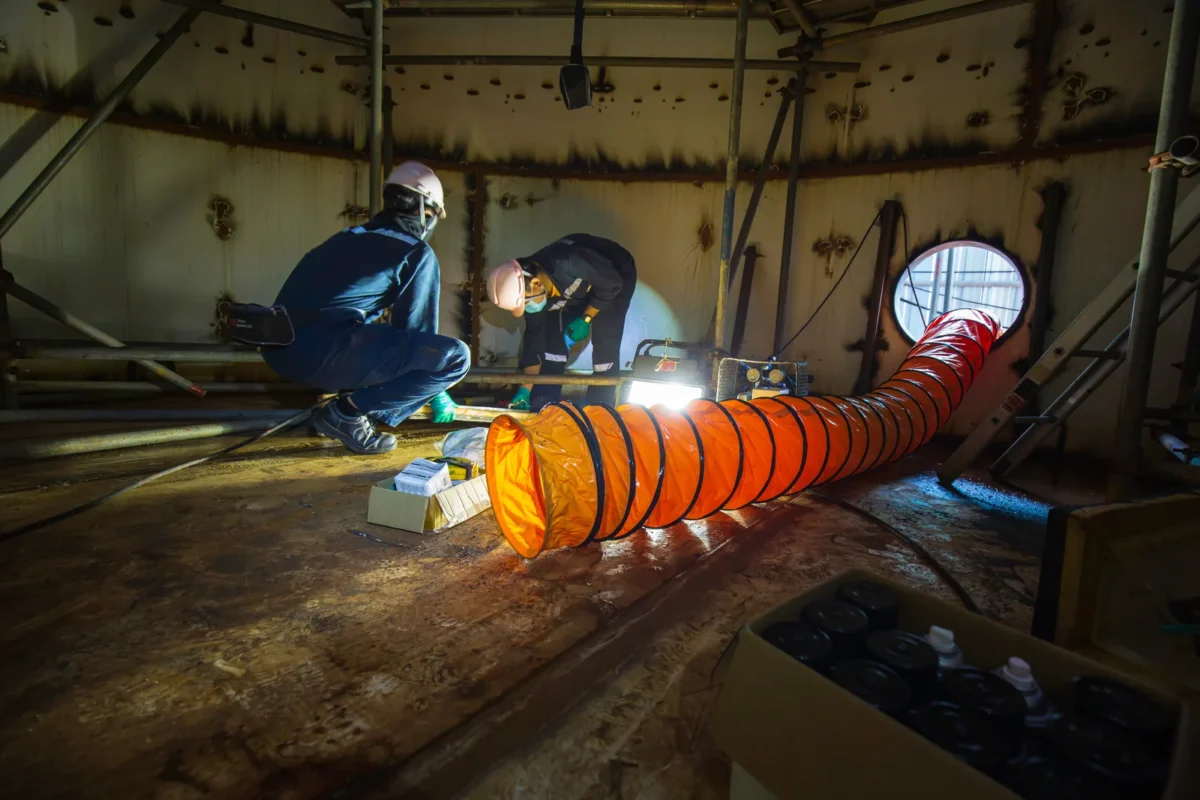
Technicians inspecting a steel oil tank floor with ventilation equipment in place.

Vessel geometry

Internal supports, baffles and coils can restrict cleaning access and create sheltered deposit areas.

Previous process materials

The vessel's operating history helps establish residue hazards and suitable cleaning methods.

Understand where residues remain

Baffles, coils, trays and agitator assemblies can interrupt the cleaning path. A method that reaches an open wall may leave a sheltered area behind an internal component. Low points and outlet connections can retain material even after the bulk contents have been recovered.

Drawings, photographs from previous inspections and the operating history help identify these features. Changes to the product, temperature or process can change the residue. A cleaning approach used successfully on an earlier product therefore needs review when the contents change.

The vessel material and any coating also affect compatibility. Cleaning agents, temperature and mechanical action must be considered together. Stronger treatment is not automatically better when the surface or installed components can be damaged.

Separate bulk recovery from surface cleaning

Removing the accessible contents is often a different task from treating an adhered deposit. Bulk recovery, washing and collection of the resulting washings need a coordinated specification. The quantity of waste can increase during cleaning, particularly where several rinses or separate residues are involved.

The intended waste route depends on the material recovered. Process records and relevant analysis can inform its description. Keeping incompatible streams separate may be part of the arrangement, rather than combining every liquid removed into one load.

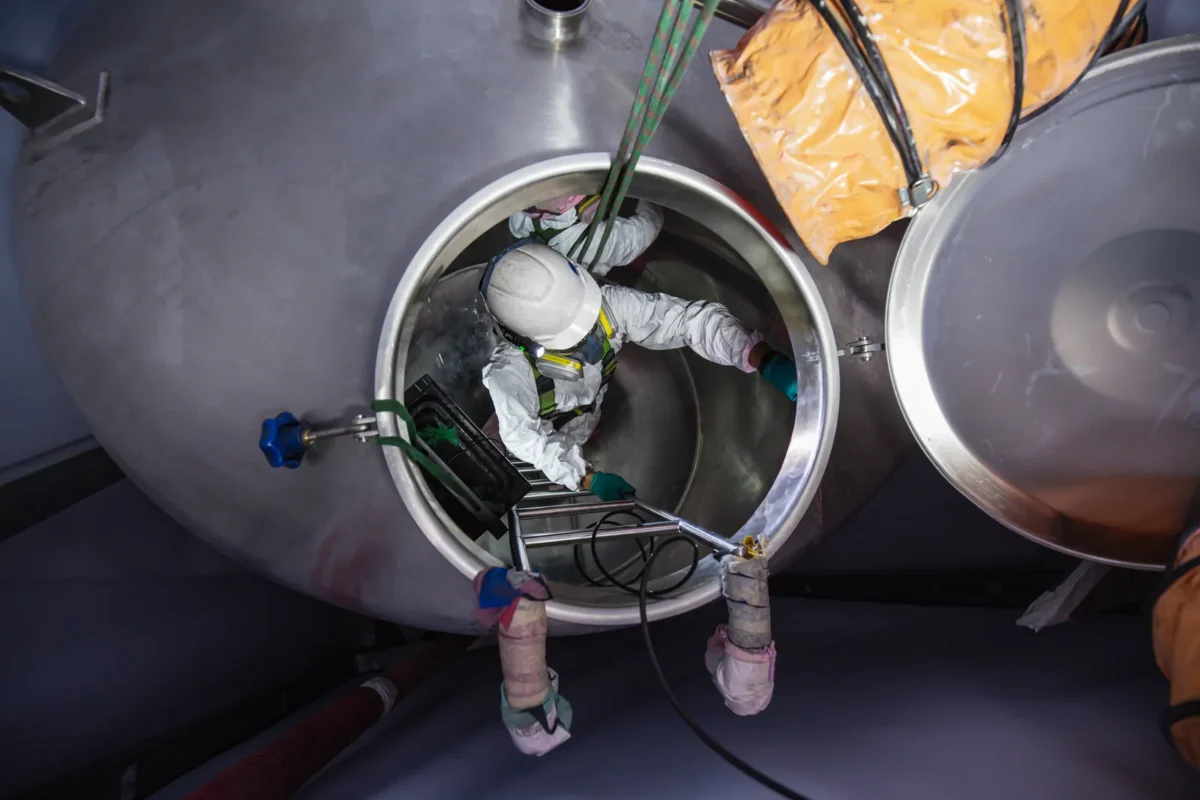
Confined-space tank access with ropes and ventilation equipment.

Discuss vessel cleaning services

Complete the form and we will get back to you.

Plan access and connections

Pressure, temperature, mechanical drives and connected pipework all affect access to a process vessel. Cleaning equipment also needs a route to the relevant surfaces. Whether the work can be completed from outside the vessel is a material planning question.

The HSE confined-space guidance explains the assessment of confined-space risks. Internal entry should not be assumed merely because a vessel has an access opening. Where entry is proposed, the risks must be assessed, including whether the work falls within confined-space requirements. Appropriate isolation, access controls and emergency arrangements must be established before work. A cleaning specification should identify whether cleaning will take place externally or requires entry.

Record coverage and hand back the equipment

A useful cleaning record identifies the vessel, included components, method used and any area that could not be reached. Photographs or inspection observations can support that record where the location and viewing conditions are clear.

Cleaning may expose a surface for examination, but it does not establish pressure-system fitness or certify a vessel for a new process. Inspection, reassembly and production-release decisions remain distinct. Defining those interfaces before the shutdown helps avoid a cleaned vessel waiting for an unplanned follow-on activity.

Technical questions

Martyn is our technical spokesperson, with particular knowledge of tank cleaning, septic tanks and drainage.

Vessel Cleaning Services for Process Equipment: common questions

Does vessel cleaning include agitators and coils?

Their surfaces can be included in the specified clean, but coverage depends on geometry and access. Mechanical servicing or dismantling must be separately defined.

Can cleaning prepare a vessel for inspection?

Yes, the scope can target the surfaces required for an inspection. The inspection itself and any resulting repair remain separate activities.

What information helps compare cleaning proposals?

The previous contents, vessel materials and dimensions, internal components, access openings, desired finish and planned inspection or restart checks are all relevant.

Tank Cleaning Services

Services

Request a quote

Menu

Get a quote