

Process tank cleaning removes residues left by mixing, heating and manufacture. The method is selected for the present condition of the residue, the vessel materials and the product that will follow.
Process Tank Cleaning
Process tank cleaning removes residues left by mixing, heating and manufacture.
HomeProcess Tank CleaningProcess Tank Cleaning enquiry
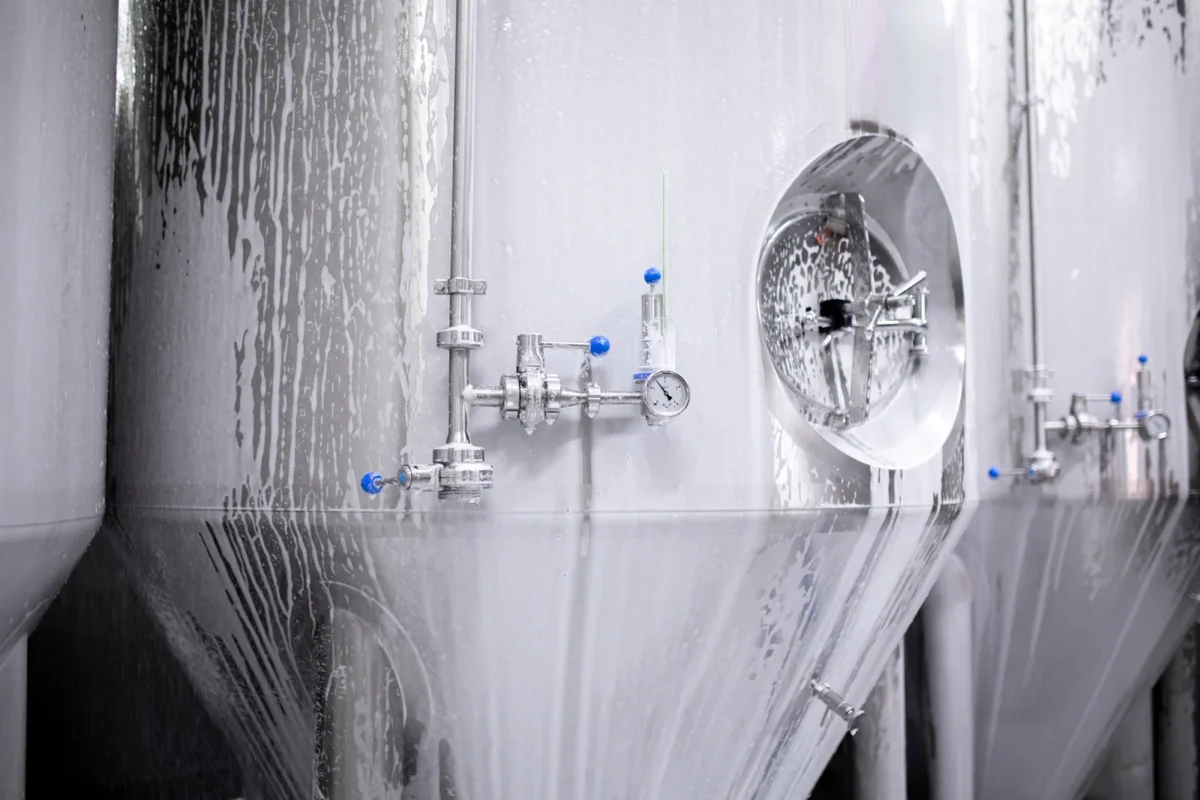
Process connections
Agitators, coils and pipework can affect cleaning coverage and the isolation needed around the vessel.
The next production use
The intended product and site procedures guide the agreed checks after the tank has been cleaned.
Residues from mixing and manufacture
A process tank can retain settled solids, viscous product or dried films around outlets, agitators and heating surfaces. A pumpable liquid, a hardened coating and loose sediment require different methods.
Previous and next products both matter. Cleaning agents and mechanical methods must be compatible with the vessel, seals and fittings, while the required finish should reflect the consequences of carry-over into the next batch.
Discuss process tank cleaning
Complete the form and we will get back to you.
Cleaning around process equipment
Existing cleaning-in-place equipment may reach some surfaces but leave dead legs or shadowed areas behind coils, blades or supports. Drawings and accessible inspection points can help identify where additional cleaning is needed.
The tank shell, mixers, pipework, strainers and transfer equipment are separate parts of the process system. Cleaning one component does not establish that every connected part has received the same treatment.
Return to production
Cleaning prepares the agreed surfaces, but product-quality release remains part of the operator’s production controls. The next batch may require checks that answer a different question from whether visible residue has been removed.
Process Tank Cleaning: common questions
Can one cleaning method suit every product change?
No. Residue chemistry, the next product and the tank materials determine what is suitable. Some changes also require specific verification by the process operator.
Is cleaning-in-place always sufficient?
Its suitability depends on the system design, operating conditions and the deposits present. Unreached surfaces or persistent residues may require additional work.
Who sets the cleanliness acceptance criteria?
The process operator should define the required result with the cleaning provider and any quality or inspection team involved before work starts.
Does cleaning the tank also clean strainers and transfer equipment?
Not automatically. Strainers, pipework and transfer equipment are separate parts of the process system and need to be included where they require cleaning.
Does cleaning release the vessel for production?
No. Cleaning addresses the agreed deposits and surfaces. Product-quality checks and the decision to return the vessel to manufacture remain part of the operator's controls.