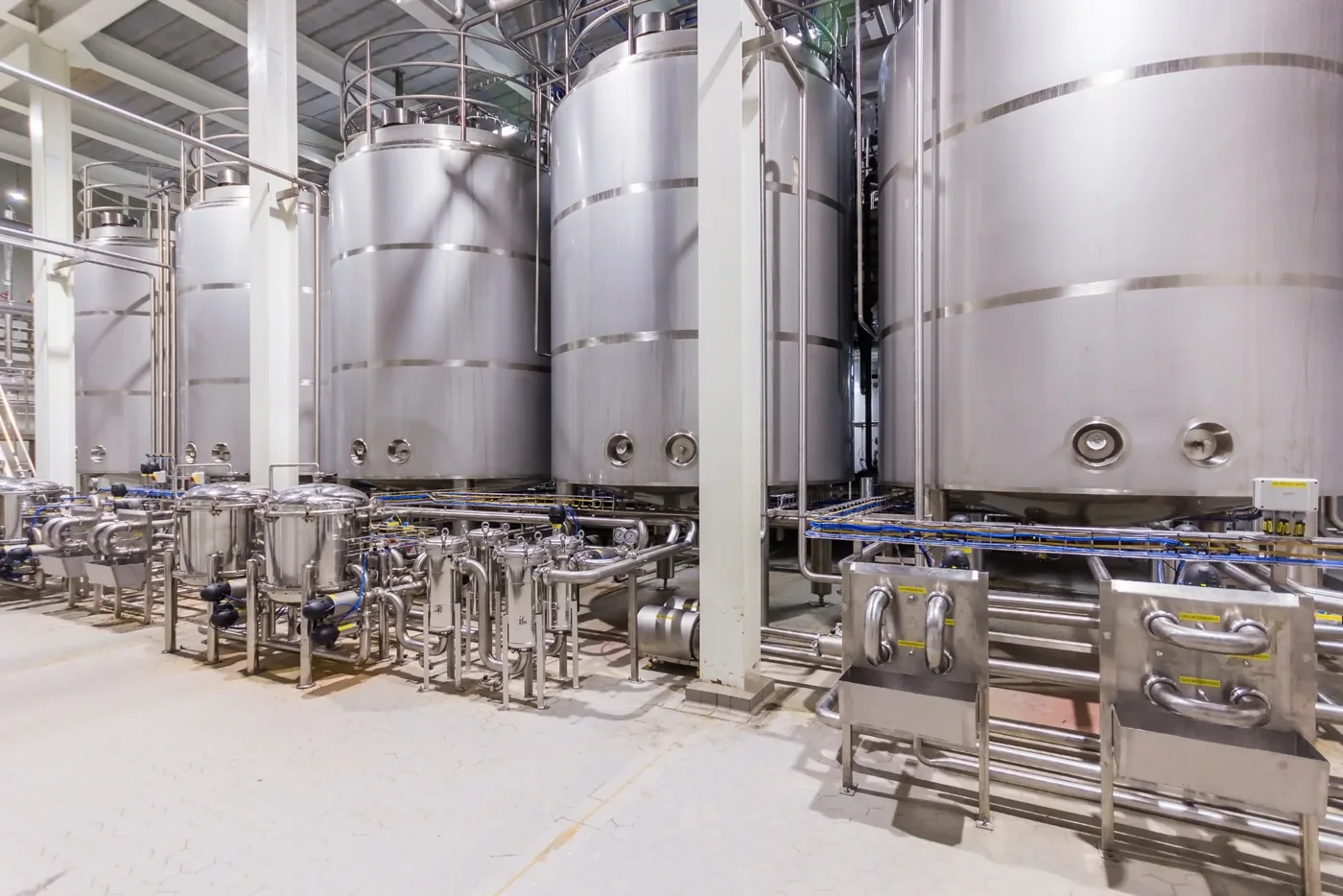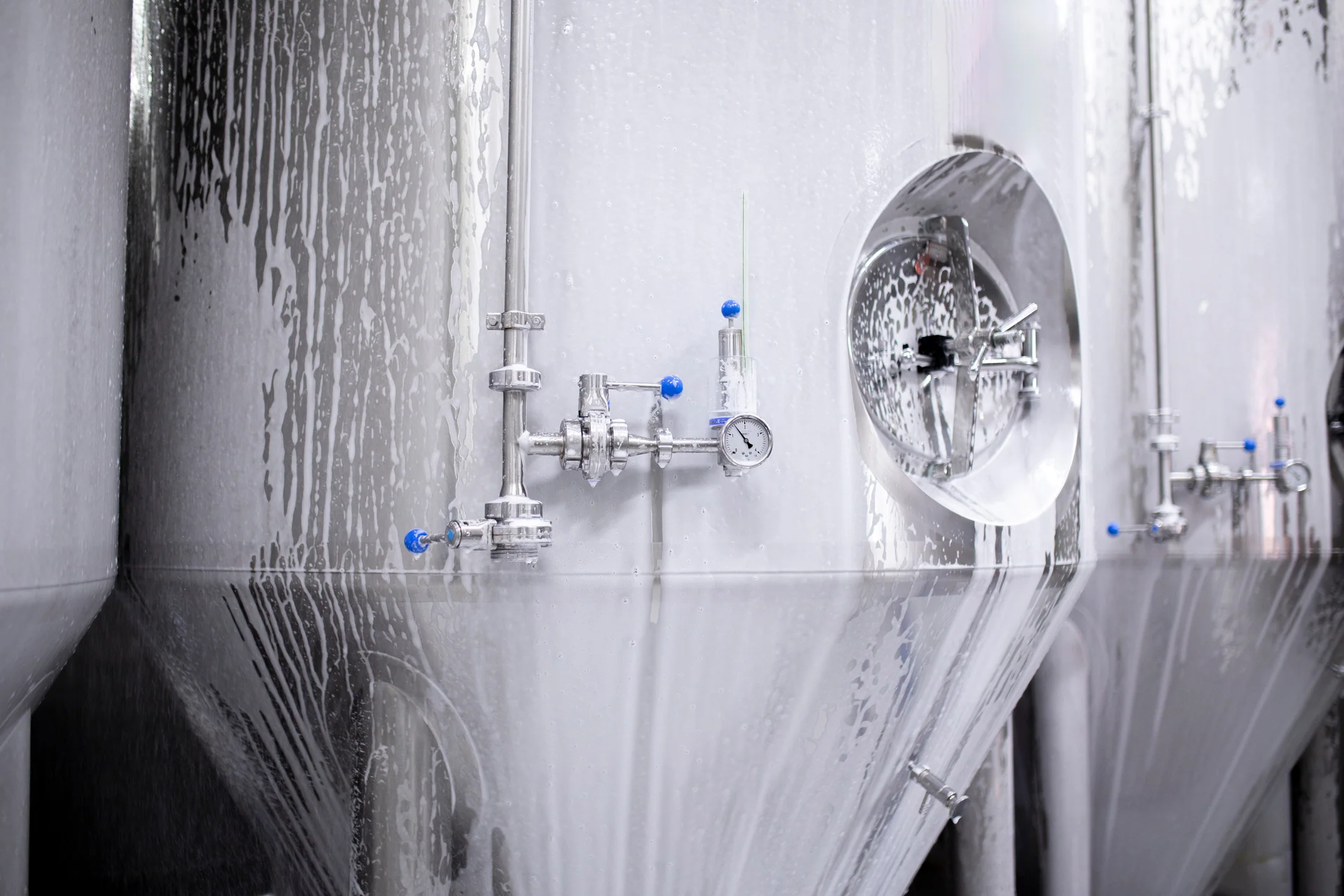
Process tank cleaning can leave residue behind agitators and baffles because internal components obstruct spray coverage, alter liquid flow and create places where material cannot drain freely. A surface that looks clean from an inspection opening does not establish that every concealed surface has received effective cleaning.
This is an important distinction for production engineers working with mixing vessels, reactors and other tanks containing internal equipment. The geometry of the vessel can be as influential as the properties of the residue itself.
Where internal obstructions interrupt coverage
Spray devices work by distributing cleaning liquid through a defined pattern. That pattern can be interrupted when solid components lie between the spray source and the surface requiring treatment.
Agitator shafts, blades, baffles, support brackets, heating coils and internal pipework can all create areas receiving less direct impingement.
These obstructed areas are commonly described as spray shadows. A spray shadow is not necessarily completely dry. It may receive liquid running down from adjacent surfaces without experiencing the same cleaning action as an exposed wall.
That difference matters with adhesive, hardened or high-viscosity residues. Wetting a deposit is not equivalent to removing it.
Agitator blades and support structures
Agitator blades introduce several distinct surfaces into the vessel. The upper face, underside, hub and mounting points may experience different levels of exposure during cleaning.
A blade can also obstruct the wall or floor area behind it. Even where some liquid passes around the obstruction, its direction and impact may be reduced.
Blade position also affects which surfaces are shielded. Whether blades can be repositioned safely must be determined through the planned cleaning procedure and machinery isolation arrangements.
Baffles and narrow interfaces
Baffles are designed to modify mixing behaviour, but their physical presence also complicates residue removal.
The rear face of a baffle may be less exposed to a central spray source than its front face. Connections between the baffle and vessel wall can retain material, particularly where the product forms a thick film.
Narrow interfaces can remain difficult to assess even when surrounding surfaces appear clean.
Why drainage and spray reach differ
Effective spray coverage does not guarantee effective drainage. Cleaning liquid may reach a location but remain trapped there with loosened product.
Horizontal blade surfaces, brackets, pockets beneath fittings and poorly drained floor sections can retain liquid or suspended solids after the main wash has finished.
These retained pockets are sometimes described as dead zones, although the term may also refer to areas of limited mixing during normal production. The two mechanisms should not be confused.
A tank might therefore have acceptable spray contact across much of its interior while still retaining deposits in local recesses.
Conversely, a vessel that drains effectively may contain shielded surfaces that were never adequately contacted by the cleaning spray.
For vessels with complex internals, the geometry becomes part of the assessment rather than simply a background feature of the equipment.
Selecting targeted access and verification
Before deciding whether another cleaning cycle is appropriate, identify what remains and where. Useful records include vessel drawings, internal equipment arrangements, the previous cleaning method and the observed residue locations.
Photographs taken through existing inspection points can help establish the pattern, although they cannot demonstrate the condition of hidden surfaces.
The choice of intervention may involve adjusting spray-device positioning, using targeted access or selecting a different cleaning method for deposits that standard circulation cannot reach.
Verification should reflect the intended next use. For example, a vessel returning to the same product may have different cleanliness requirements from one undergoing a product change or detailed maintenance inspection.
The HSE guidance on work equipment maintenance identifies the need to isolate moving equipment and relevant connected systems. It also advises avoiding vessel entry where possible.
Where an assessment identifies shielded surfaces or retained pockets, process tank cleaning should be considered in relation to those specific areas, rather than judged solely by the appearance of the most visible surfaces.
For the next cleaning assessment, mark the suspected shielded surfaces and residue-retention points on the vessel drawings, then compare them with the proposed spray arrangement, drainage paths and available inspection points. This helps establish whether altered coverage, targeted cleaning or further inspection is needed, rather than repeating a cycle that may leave the same areas untreated.