

Underground tank removal combines preparation of the vessel with an assessed excavation and lifting method. Remaining contents and evidence of leakage are considered without treating tank removal as proof of the surrounding ground condition.
Underground Tank Removal
Underground tank removal combines tank preparation with excavation and lifting, while ground condition remains a separate concern.
HomeUnderground Tank RemovalUnderground Tank Removal enquiry
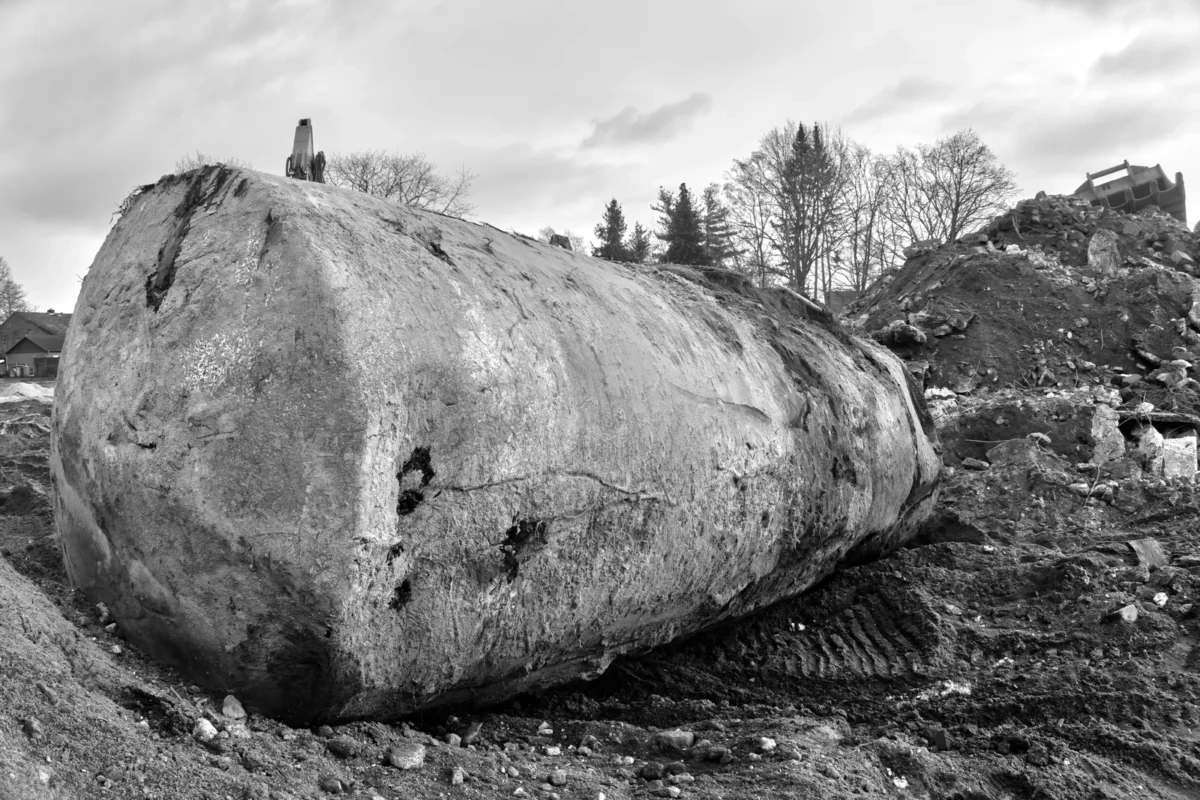
Buried services
Historic plans do not replace checks for the actual tank, connected pipework and other buried services before excavation.
Ground conditions
The work should account for signs of leakage or affected ground found as the tank is exposed.
Tank location and excavation constraints
Historic plans can help locate the tank, dimensions and connected pipework, but the excavation still needs suitable checks for the actual installation and other buried services.
Buildings, vehicle access, groundwater and nearby structures can affect the excavation. The contents history also matters because residual product and vapour need to be dealt with before physical removal.
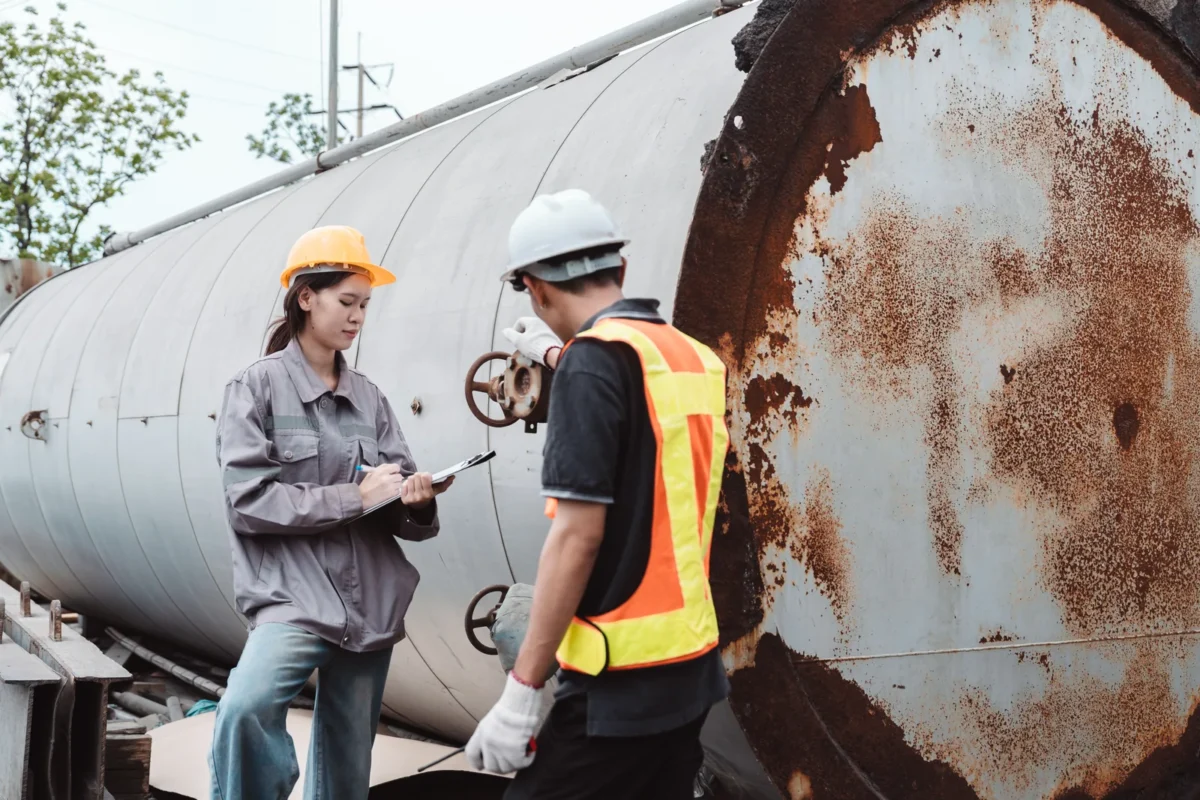
Discuss underground tank removal
Complete the form and we will get back to you.
Excavation and tank removal
Excavation, lifting and the management of unstable ground or water require competent planning. Cleaning the tank does not remove those construction risks or establish that the vessel is ready for every possible dismantling method.
The tank, redundant pipework, ordinary excavated material and material suspected of contamination are different parts of the work. Their handling depends on what is found rather than on proximity to the tank alone.
Possible contamination around the tank
Environment Agency guidance for underground fuel tanks addresses possible soil and groundwater contamination during decommissioning. Removing the vessel does not establish that leaked fuel has been removed from the ground; investigation or remediation is a separate decision where the evidence calls for it.
Underground Tank Removal: common questions
Is the old tank drawing enough to start excavation?
No. The location, connected equipment and other underground services need suitable checks before intrusive work.
Is all soil around a fuel tank hazardous waste?
No. Soil needs an appropriate assessment based on its condition and contamination. It should not be classified solely because it was excavated near a tank.
Does tank removal include reinstating the surface?
Only where agreed. Backfill, compaction and the final surface are separate from preparing and removing the tank.
Does removing the tank prove the ground is clean?
No. Leakage may have affected soil or groundwater beyond it. Findings during removal determine whether further investigation is needed.
Can groundwater affect an underground tank removal?
Yes. Groundwater can change the excavation and water-management arrangements. It does not, by itself, establish whether contamination is present.