Diesel filtration alone does not necessarily remove water collecting at the bottom of a storage tank. A fuel-polishing system fitted with suitable water-separation equipment may remove water carried into its circulation circuit, but it cannot reliably remove a settled layer that remains below the suction point. The result depends on the pickup arrangement, the water’s form and the equipment’s separation capability.
For fleet operators and facilities managing standby fuel, the distinction matters. Treating the circulating diesel and removing settled water are related tasks, but they are not always the same operation.
Suspended versus settled water
Water can be present in stored diesel in different forms. Small droplets may be dispersed through the fuel, while larger quantities can separate and collect at the lowest part of the tank. Some moisture may remain dissolved in the fuel and is not removed by ordinary particulate filtration.
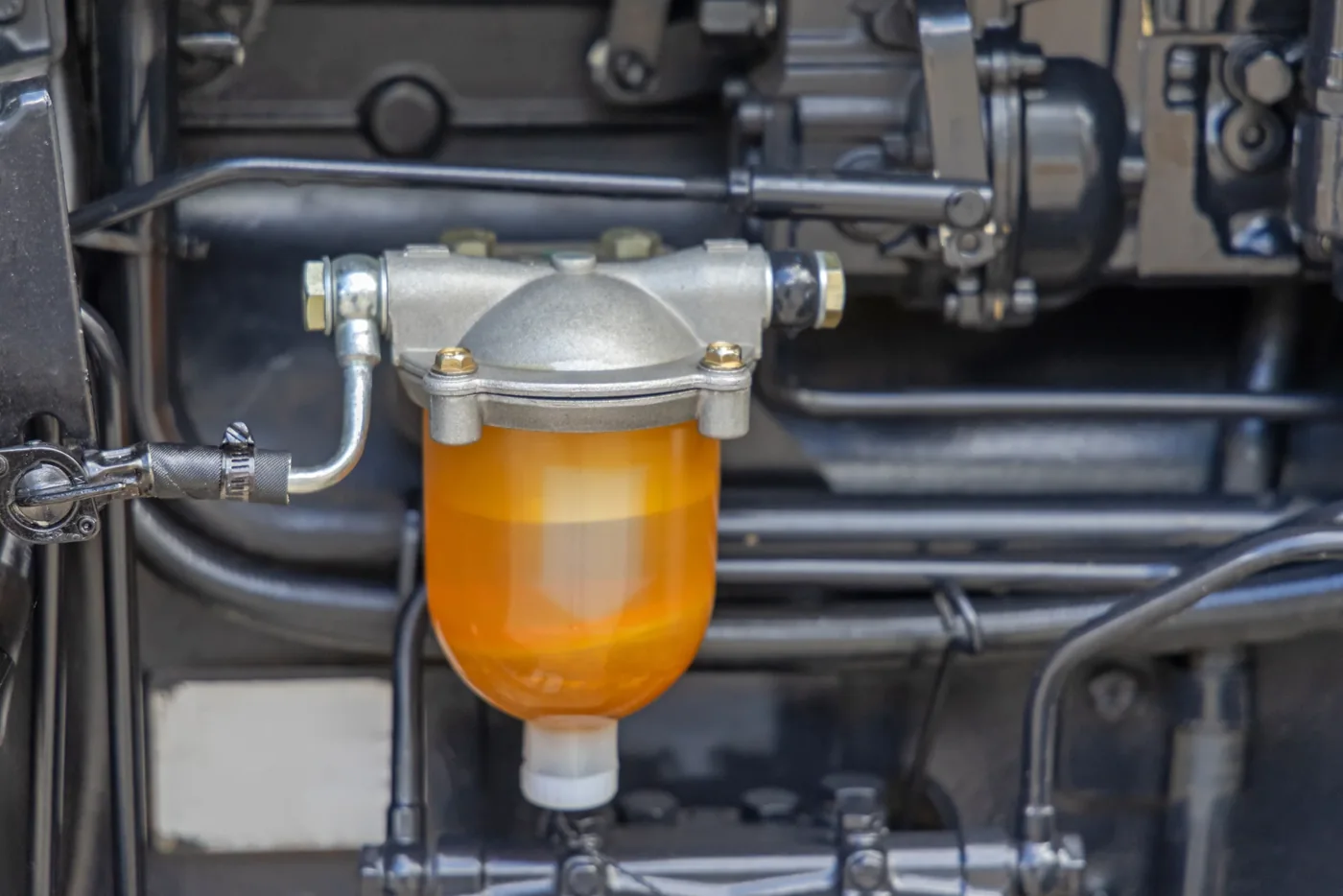
Suspended water may be carried through a suitable separation unit as diesel circulates. Depending on its design, the equipment can encourage droplets to combine or separate them from the fuel stream.
Free water is a distinct liquid phase. Because water is denser than diesel, it generally settles beneath the fuel when conditions allow separation.
A tank can therefore contain fuel that appears relatively clear at its normal withdrawal point while a substantial quantity of water remains below it.
This is particularly relevant to installations where fuel is stored for extended periods and turnover is infrequent.
What filtration cannot reach
A filtration system only treats material that enters its circulation path. If the suction point sits above the bottom-water layer, the pump may circulate diesel repeatedly without removing that settled water.
Suction height is therefore as important as the filtration equipment. A system drawing from the normal fuel outlet may leave contaminants below that connection untouched.
The arrangement also varies between vertical, horizontal and compartmented tanks. Internal features, floor slope and the position of low-point drains influence where separated water collects.
Even a separator designed to remove water cannot guarantee removal from areas outside the effective pickup zone.
Why filter changes may not solve the problem
Repeatedly replacing filters does not remove water that never reaches them. It may address material captured during circulation without changing the condition of the tank bottom.
If an operator notices water during sampling, unusual filter loading or contamination after deliveries, the first task is to establish whether the concern is confined to the circulating fuel or includes settled material.
The distinction between water, sludge and other tank-bottom deposits is explored further in the diesel tank water and sludge guide.
Choosing polishing, testing or tank cleaning
Three different interventions may be relevant, depending on what the assessment identifies.
- Fuel polishing: Suitable where the fuel contains contaminants that the selected filtration and separation equipment can effectively treat.
- Fuel testing: Useful where the nature, distribution or significance of contamination is uncertain and a representative assessment is needed.
- Tank cleaning: Relevant where free water, sludge or deposits remain in parts of the tank that fuel circulation cannot adequately clear.
These approaches can be complementary. Removing bottom deposits does not automatically establish that the retained diesel meets the required condition, while treating the diesel does not establish that the vessel is clean.
For an uncertain fuel-quality problem, fuel testing services provide a separate assessment route before deciding what treatment is appropriate.
Consider how water entered the tank
Possible entry routes include condensation, deliveries containing moisture and faults affecting fill points, seals or other fittings. Removing the existing water without investigating repeated ingress may produce only temporary improvement.
The GOV.UK oil storage guidance for England and Wales explains requirements for applicable oil storage containers, fittings and secondary containment. It includes diesel storage but has exemptions, including underground containers. These storage requirements are separate from assessing how water entered the tank or whether filtration can remove it.
For a tank with measurable bottom water, the useful starting point is to establish the water’s location and quantity, the fuel’s condition and the available withdrawal points. That evidence will determine whether fuel polishing alone is suitable or whether separate removal of settled contamination is needed.