Tank Interior Cleaning and Confined-Space Access

Tank interior cleaning is shaped by the vessel as well as the residue. Baffles, coils, fittings and restricted openings can leave surfaces outside the reach of equipment operated from outside. A tank-specific scope identifies the required finish and the accessible areas before deciding whether entry forms part of the work.

HomeTank Interior Cleaning and Confined-Space Access

Tank Interior Cleaning and Confined-Space Access enquiry

Match the clean to the internal arrangement

The external dimensions of a tank do not describe the surfaces inside it. A vessel can contain heating coils, supports, partitions or other fittings that interrupt access. Drawings and previous inspection information help identify those features and the parts most likely to retain material.

A deposit on an open wall can present a different cleaning problem from residue beneath a fitting or behind a baffle. The scope should describe the location and condition of the deposits, not simply request an empty tank. The distinction becomes particularly important before inspection, product change or repair.
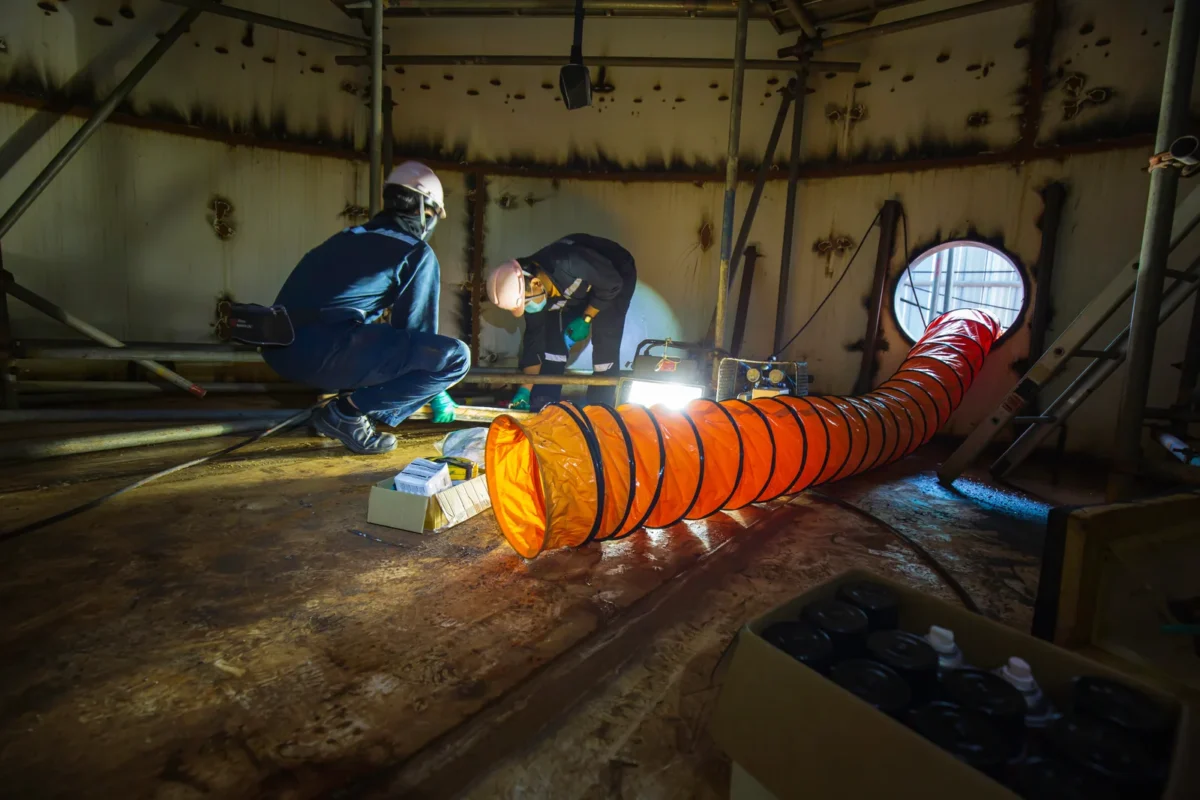
Technicians inspecting a steel oil tank floor with ventilation equipment in place.

Entry arrangements

The work needs a confined-space assessment, isolation and suitable entry controls where entry is required.

Rescue preparation

Emergency arrangements must fit the tank, access route and planned work before anyone enters.

Consider what can be reached from outside

Non-entry methods depend on the available opening and the ability to reach the required surface. A tool or cleaning head may reach the main cylinder while leaving a sheltered area behind internal equipment. Recovering loosened material is also part of that assessment.

The required result should be stated so that reach can be judged against it. Removing bulk residue, exposing a weld for inspection and preparing a surface for a coating are different endpoints. A method suited to one should not be assumed to satisfy all three.

Protect the vessel and its fittings

The tank material, lining and condition affect the choice of cleaning method. An internal coating or a delicate fitting can limit the contact that is appropriate. The substance being removed and its previous storage conditions also influence the way deposits respond.

Cleaning records can identify the surfaces attended and visible findings without presenting the clean as a structural inspection. Damage already present, a remaining deposit and a surface that could not be reached should remain distinct in the handover.

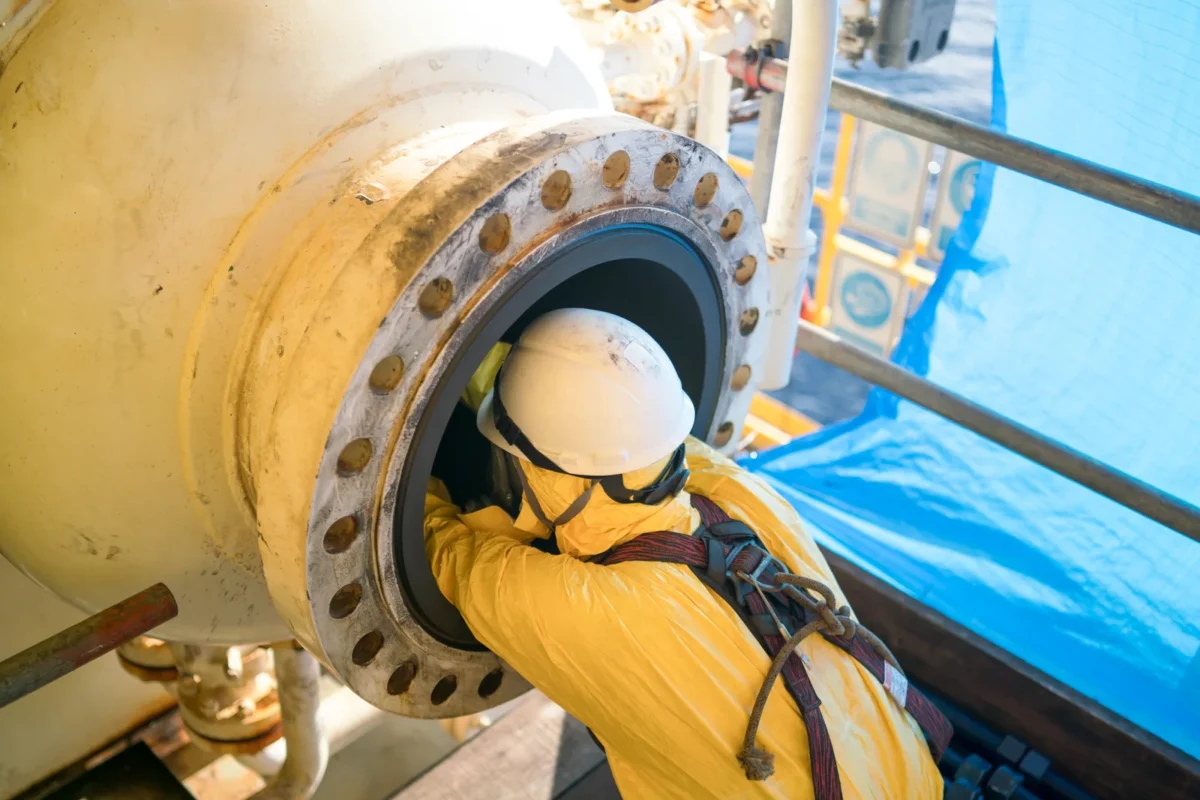
Worker in protective clothing at the manway of an industrial pressure vessel

Discuss confined space tank cleaning

Complete the form and we will get back to you.

Separate the cleaning task from entry arrangements

HSE’s guidance on working in confined spaces explains the need to assess confined-space work and avoid entry where reasonably practicable. Where entry is necessary, the assessment and arrangements must address the actual tank and task. A vessel name or previous clean does not establish the conditions for a later entry.

Connected pipework, incoming material, machinery and the proposed cleaning method belong in that planning. The access arrangement and emergency preparation also have to match the work. These are task-specific requirements, not attributes that can be inferred from a tank’s empty appearance.

Define the handover for the next use

The next activity determines the information needed at completion. An inspector may need particular surfaces exposed, while a product change may involve a separate release procedure. A repair contractor may require preparation beyond the cleaning already undertaken.

Recording the completed areas, remaining access limits and the agreed endpoint gives the next team a clearer starting point. It does not replace their own assessment of the work that follows. The tank can then move between cleaning, inspection and maintenance stages with the responsibilities identified.

Tank Interior Cleaning and Confined-Space Access: common questions

Why does the internal drawing matter?

It can show baffles, coils and other fittings that restrict reach or conceal residue. Those features affect both the cleaning scope and the means of access.

Can outside-operated equipment clean every surface?

That depends on the opening, vessel geometry, fittings and required finish. Areas outside its reach should be identified rather than assumed clean.

Does a clean tank automatically meet a later inspection or repair requirement?

No. The next task may need a different preparation standard or assessment. The cleaning endpoint and the next team’s requirements should be stated separately.

Tank Cleaning Services

Services

Request a quote

Menu

Get a quote