

Robotic tank cleaning uses equipment operated from outside the vessel to remove suitable deposits. Its usefulness depends on the tank openings, internal geometry, residue and atmosphere rather than on remote operation alone.
Robotic Tank Cleaning
Robotic tank cleaning uses equipment operated from outside to remove suitable deposits.
HomeRobotic Tank CleaningRobotic Tank Cleaning enquiry
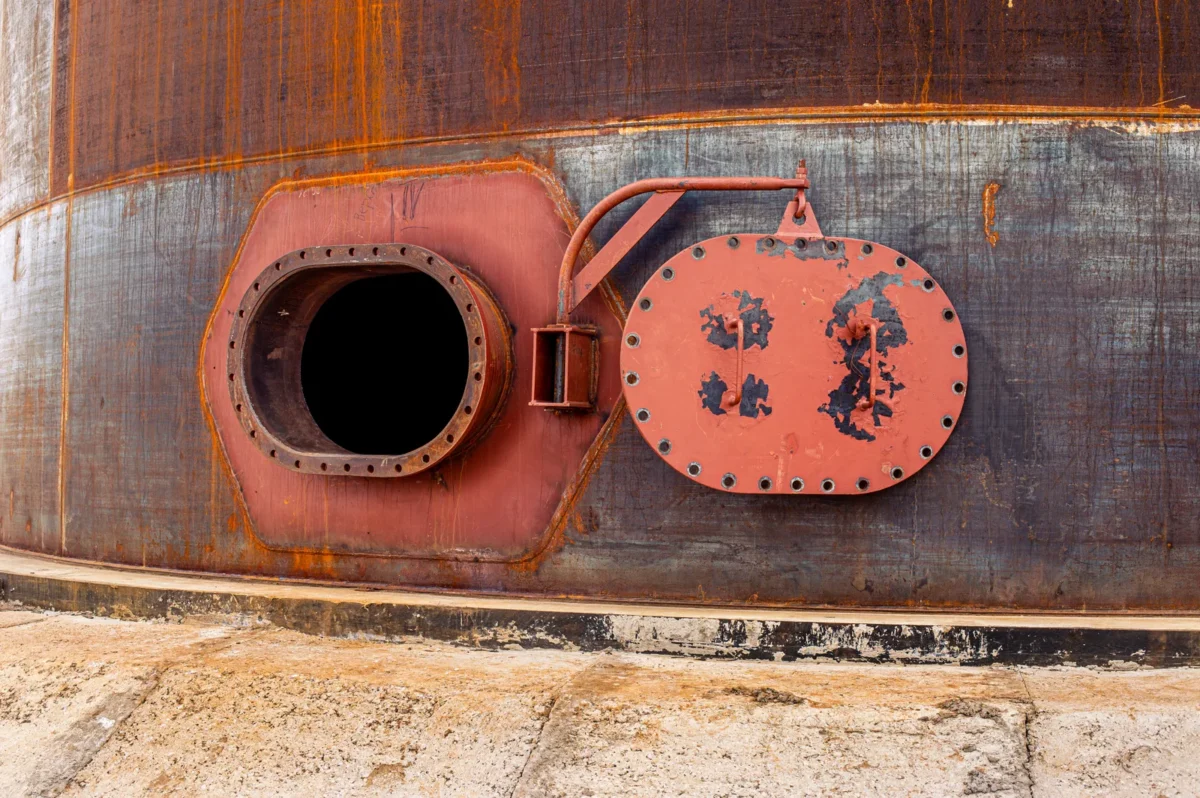
Equipment access
Openings, internal fittings and the tank floor affect the reach of remotely operated cleaning equipment.
Observed cleaning coverage
Camera views or other observations can show the areas reached and deposits that remain inaccessible.
Robotic access and equipment suitability
A machine needs a workable route into the tank and across the areas being cleaned. Baffles, columns, coils and changes in floor level can restrict movement or leave sections beyond its reach.
The equipment must also be compatible with the contents, tank lining and assessed atmosphere. Remote operation does not make a system automatically suitable for flammable vapours, corrosive residues or every vessel material.

Discuss robotic tank cleaning
Complete the form and we will get back to you.
Remote operation and tank hazards
Isolation, product transfer and collection of recovered material remain necessary even when nobody enters the tank. Connected equipment and stored energy must be controlled appropriately before the cleaning operation.
Deployment and retrieval need to be possible for the proposed equipment, including a suitable response if it stops or cannot pass an obstruction. Remote operation does not remove the hazards of retrieval, isolation or incomplete cleaning coverage.
Observed cleaning coverage
Cameras or other observations can help show the areas reached, but they do not establish structural integrity. If the required finish cannot be achieved remotely, any further method, including entry, needs its own assessment and controls.
Robotic Tank Cleaning: common questions
Can robotic cleaning always avoid tank entry?
No. It may avoid entry for a suitable task, but access and cleaning coverage need assessment. Any later entry requires its own controls.
Can a remote machine operate in any fuel tank?
No. The equipment must be suitable for the fuel and assessed atmosphere. Remote operation alone does not establish that suitability.
Does robotic cleaning prove the tank is structurally sound?
No. Images or observations can show accessible cleaned areas, but structural condition requires the appropriate separate inspection or assessment.
What needs to be isolated before robotic cleaning?
Relevant connected equipment, pipework and sources of stored energy or incoming material must be controlled before the cleaning operation.
What happens if the robotic equipment stops inside the tank?
The proposed system needs an assessed retrieval arrangement. A problem with the equipment does not automatically justify tank entry.